Comparison of Express Entry in the last three months
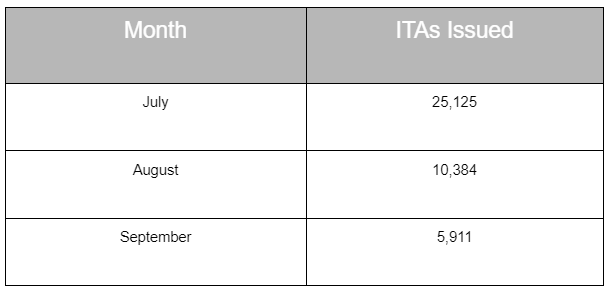
As of October 2024, Immigration, Refugees, and Citizenship Canada’s (IRCC) most recent trends and policy changes are reflected in the dynamic candidate pool displayed via Canada’s Express Entry system. September was much quieter after a busy summer, with only three draws yielding approximately 6,000 Invitations to Apply (ITAs). These attract candidates for the Canadian Experience Class (CEC), the French-language proficient candidates program, and the Provincial Nominee Program (PNP).
A change from the record-breaking draw activity observed in July and August, when the IRCC sought to meet aggressive immigration targets, was indicated by this decrease in the number of ITAs. Still, the goal was to draw people who could support Canada’s economic demands and linguistic variety.
In order to encourage candidates who are native speakers of French and English to submit their applications for permanent residency (PR), three Express Entry draws were held in September.
Comparing the draws from the previous three months
Recent trends in IRCC’s draw types show a consistent focus on Provincial Nominee Program (PNP), Canadian Experience Class (CEC), and French-language proficiency candidates over the past three months (July, August, and September). Both July and August saw multiple draws targeting PNP and CEC candidates. This approach aligns with Immigration Minister Marc Miller’s emphasis on prioritizing “domestic” immigration candidates — those already in Canada — and supporting Francophone immigration outside Quebec, reflecting Canada’s broader immigration strategy.
A closer look at the Express Entry pool’s Comprehensive Ranking System (CRS) score distribution reveals key trends. Most candidates fall within the CRS score range of 351–480. This range typically includes skilled workers with varying degrees of experience, education, and language proficiency. The number of candidates with scores above 500 is notably smaller, reflecting the highly competitive nature of achieving a score that virtually guarantees an ITA.
The composition of the pool suggests that while there are still opportunities for high-scoring candidates, those with lower scores may need to explore additional pathways, such as obtaining a provincial nomination to boost their CRS scores.
In September, IRCC issued fewer ITAs compared to previous months:
Understanding the Distribution of CRS Scores in the Express Entry Pool: A Percentile Analysis
The following table utilizes percentile scores to give a clearer picture of how specific CRS-scores rank in the overall distribution of CRS-scores within the Express Entry candidate pool.
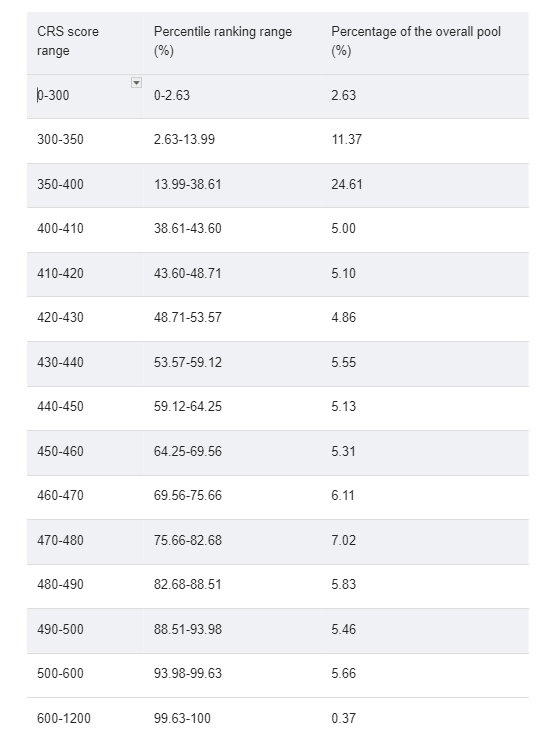
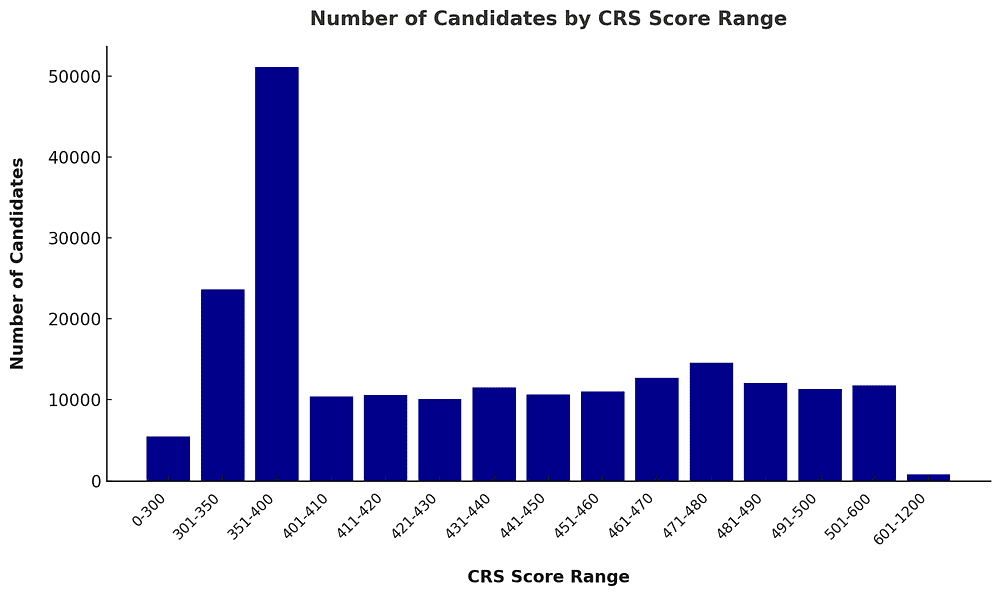
According to the table, the percentile analysis of CRS scores in the Express Entry pool provides insights into how candidates are distributed across various score ranges. The data, calculated using the top boundary of each CRS range, shows that lower CRS scores, such as 0–300, represent only 2.63% of the pool, while scores between 350–400 make up about 24.61% — the largest segment. Higher scores like 500–600 fall within the top 6.02% of candidates, emphasizing the competitiveness of achieving a score in these upper ranges. This analysis helps understand the positioning of candidates in the pool.
A period of strategic modifications to Canada’s Express Entry system, indicating a shift in emphasis towards certain immigration objectives, will begin in October 2024. In order to optimize their chances of obtaining an ITA, candidates should modify their approaches as the IRCC continues to hone its methodology.
The path to permanent residence in Canada is still active, with a varied pool and changing requirements. It presents chances for people who fit in well with the goals and objectives of the nation.
To know your next steps in order to get Canadian PR contact Growing Globe Immigration.

